
Is a Water Mattress Pad Worth It? ICE SLEEP vs. Eight Sleep, Tested by Real Users
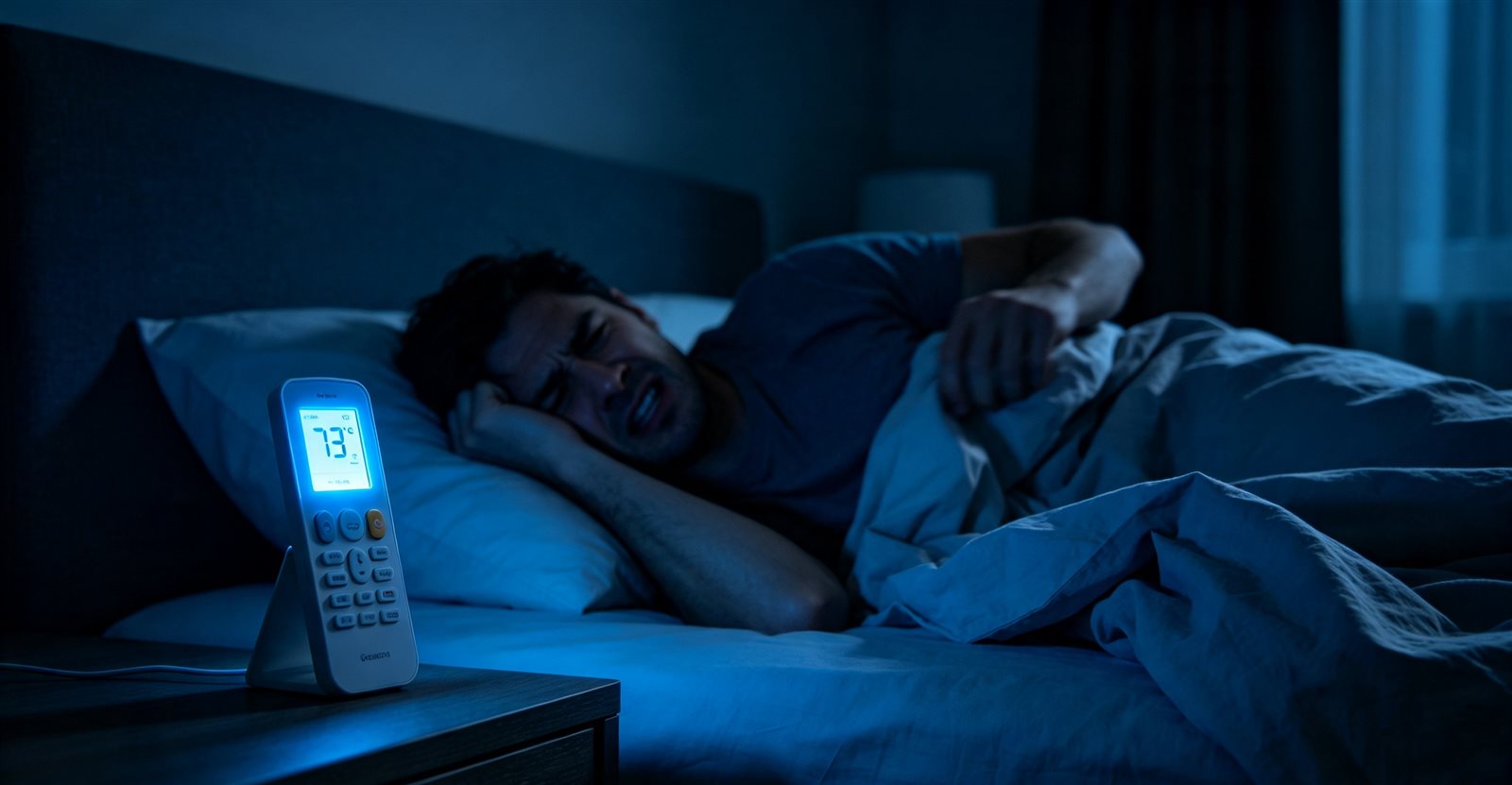
Have you ever woken up at 2am drenched in sweat, covers kicked to the floor? Or climbed into bed with ice-cold feet and spent an hour shivering before drifting off? If either sounds familiar, you already know what we are talking about.
The traditional fixes only make it worse. An electric blanket heats — but it dries out your skin, creates hot spots, and cannot cool you in summer. An air conditioner runs all night at 1000-3000W, spiking your electricity bill, and the temperature swings wake you up anyway. Your mattress, where you spend eight hours a day, quietly becomes the hidden enemy of your sleep.
That is why more and more people are switching to water-circulating temperature control. Instead of heating wires or blowing air, water circulates through the mattress pad — removing heat in summer, adding it in winter, precisely and evenly, without drying the air.
Q1: How does a water-circulating mattress pad actually work?
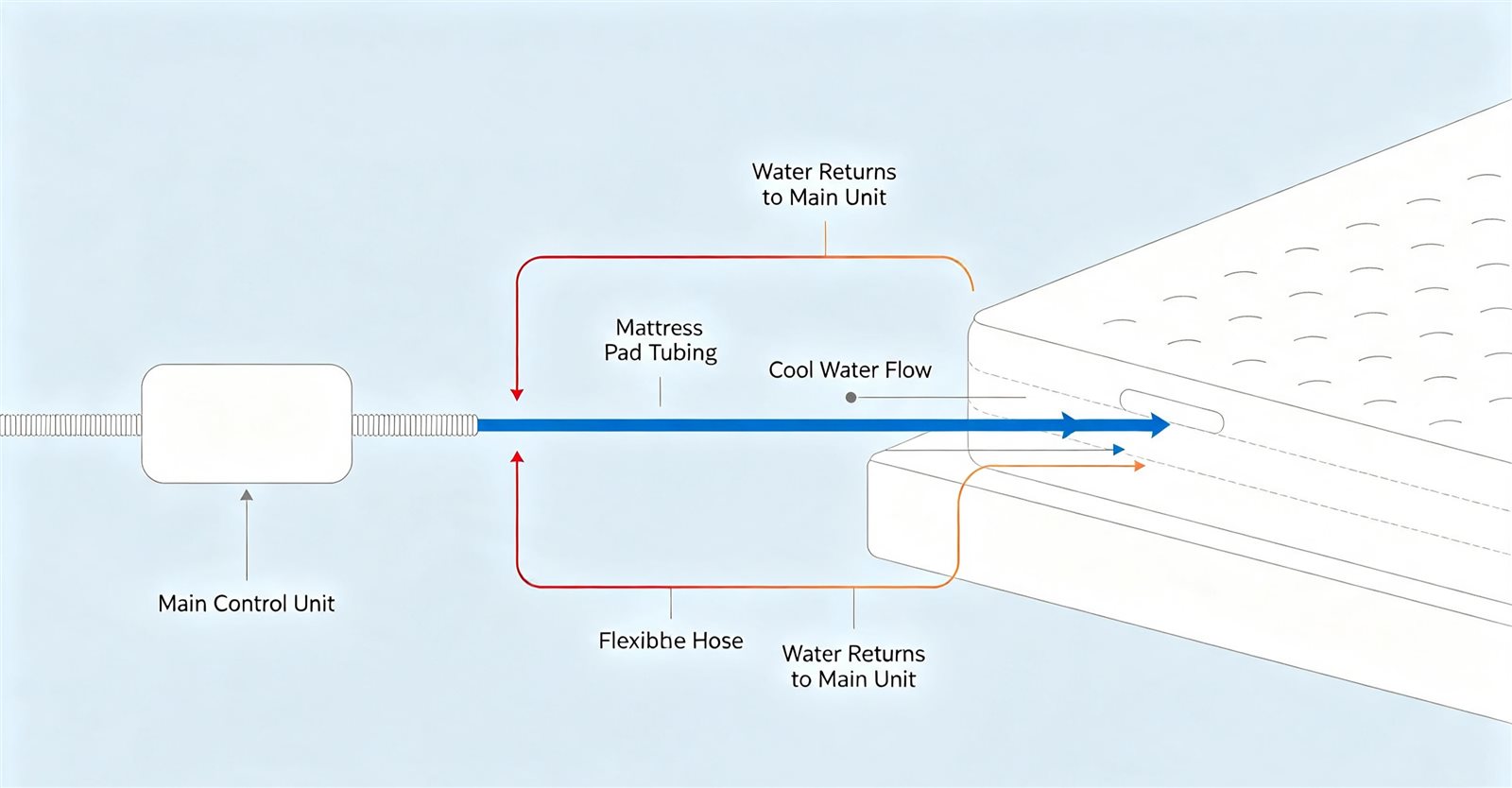
It is simpler than it sounds. Three parts: a temperature control unit, soft hoses, and the pad itself. The unit heats or cools water to your set temperature and pumps it through the hoses into densely arranged tubes inside the pad. The water circulates, exchanging heat with your body, so your bed stays at the temperature you chose.
One sentence summary: it does not manufacture cold or heat — it carries your heat away in cooling mode, or brings warmth to you in heating mode.
Q2: Is it better than an electric blanket or air conditioning?
Compare the three side by side and the difference becomes obvious:
Compare the three side by side
- Water pad: water circulation, precise control — Electric blanket: resistance wire, on-off cycling — AC: air convection, slow swings
- Comfort: even and not drying — vs hot spots and dry air — vs drafty and drying
- Functions: cooling + heating in one — vs heating only — vs whole-room cooling and heating
- Power use: ≤200W — vs 60-120W — vs 1000-3000W
- Safety: water-electricity separation, no EMF — vs EMF from wires — vs none in bed
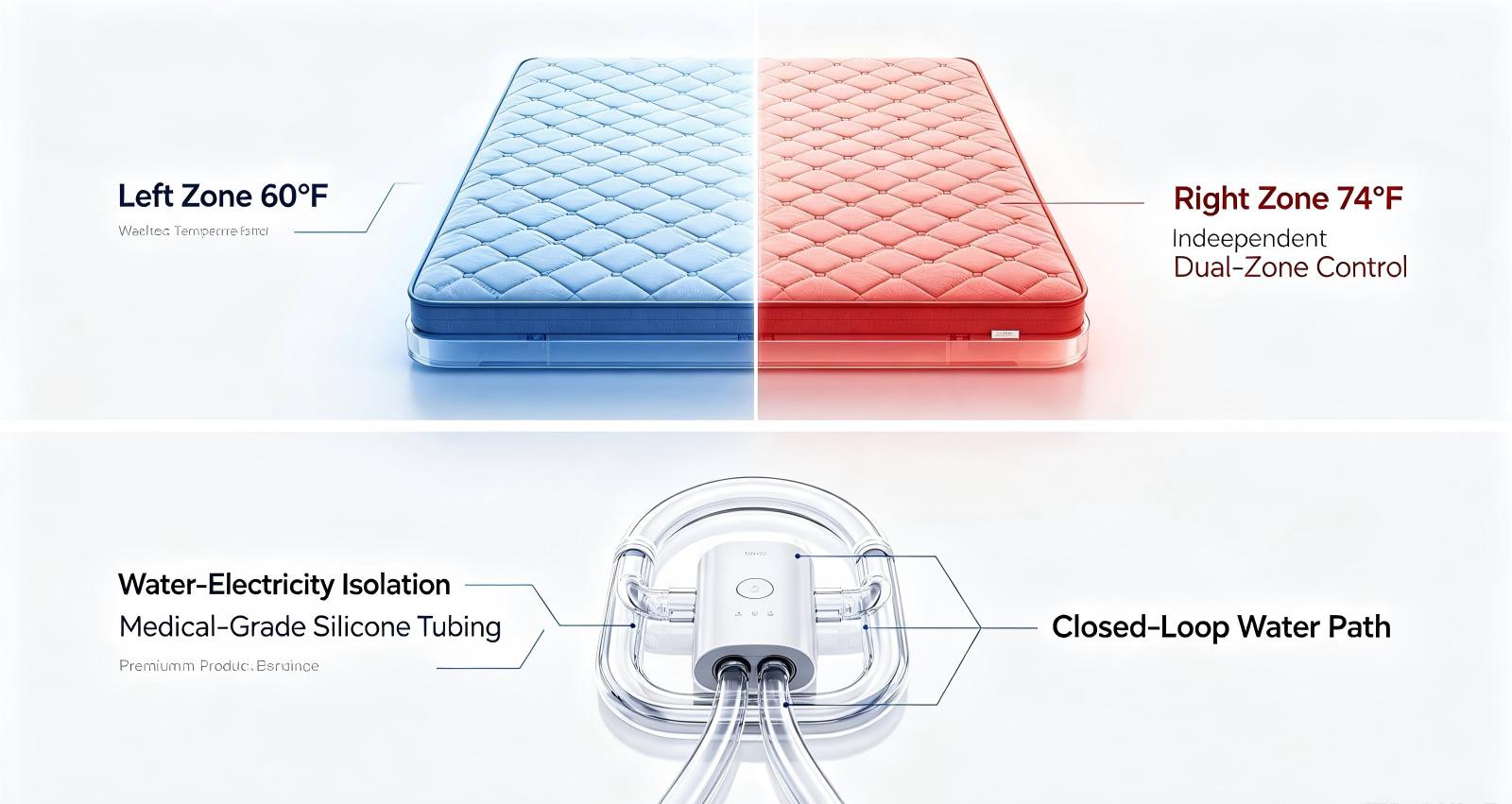
Q3: What is independent left/right temperature control for?
Research shows women and men prefer different bed temperatures by about 2°C — men are comfortable around 32-33°C, women around 33.5-34.5°C. If one partner runs cold and the other runs hot, or one is going through menopause with night sweats, dual-zone control lets each side keep its own temperature. No more fighting over the remote.
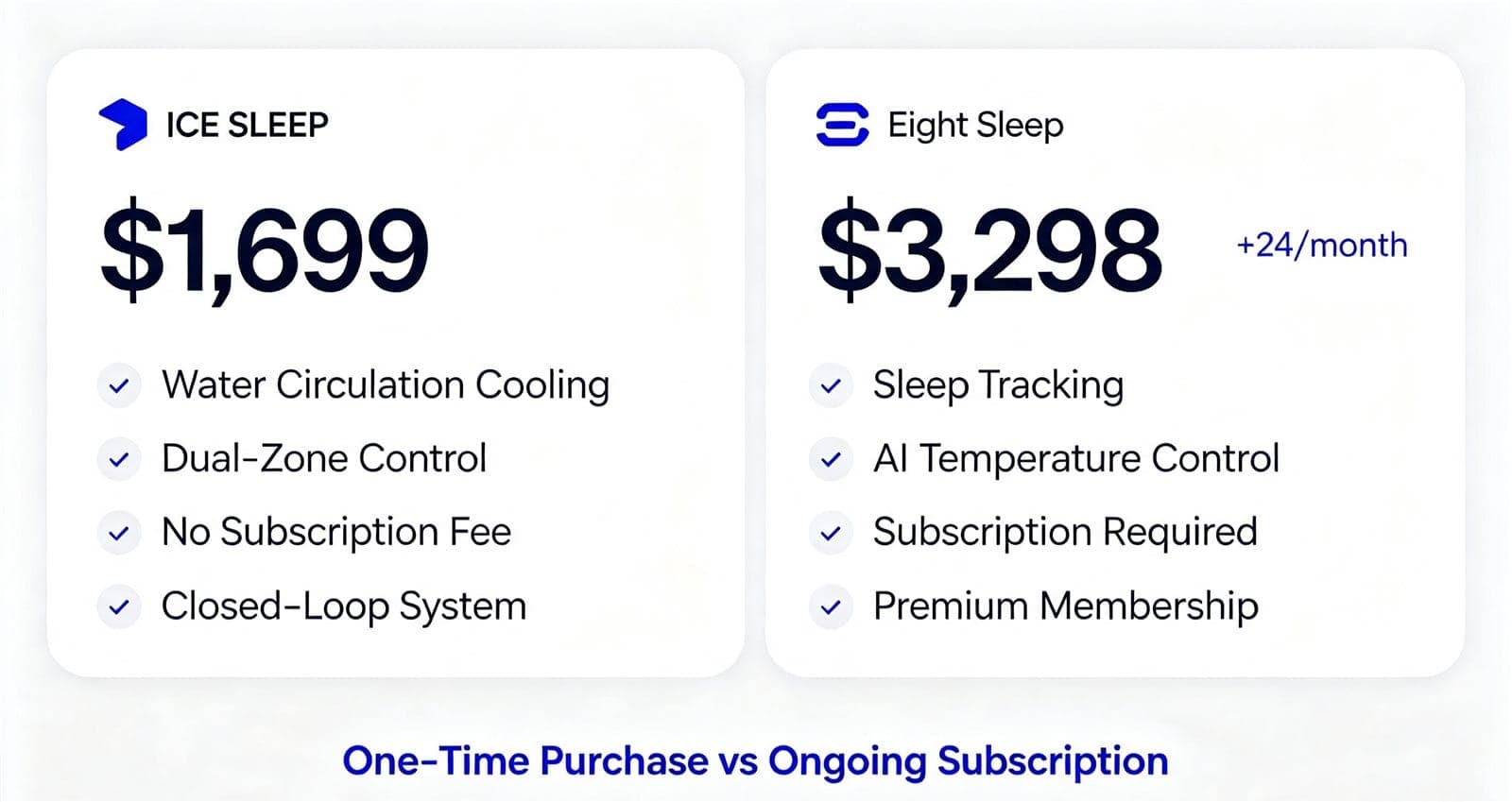
ICE SLEEP IS-02 vs Eight Sleep Pod 4 Cover
We compared them the way a buyer would — features, price, and what happens after year one. Our honest take: the same core technology should not be held hostage by a subscription. That is not bashing a competitor — it is calling out a pricing model.
- Price: $2,199 one-time — vs $3,298 + $24/month subscription
- Core features: dual-zone, water circulation, app control — vs same core features
- Extra fees: none — vs Autopilot features locked behind a monthly fee
- Technology: ESA self-learning algorithm — vs similar AI algorithm
The numbers behind the comfort
Data beats adjectives. Clinical data from our product testing shows falling asleep up to 44% faster and deep sleep increasing by up to 34% when the bed is held in the comfort zone of 32-34°C. A drying electric blanket, by contrast, can increase nighttime awakenings as your skin loses moisture.
Certifications back it up too: CE-RED, GB Class A, EMC certification and IPX65 water protection. And our reviews page has real customers — Sarah M. with night sweats, James R. after years of waking up hot — describing the same result we experienced.
And if you are still comparing, do the math the way we did: features you use every night, once. Not a brand name, and not a monthly fee that never ends.
- Falling asleep up to 44% faster within the 32-34°C comfort zone
- Deep sleep up to +34% (clinical testing data)
- Certifications: CE-RED · GB Class A · EMC · IPX65

Where to go from here
If you have been woken up by heat or cold for too long, if you want to say goodbye to the electric blanket's dryness and the air conditioner's electricity bill, start by understanding how water-circulation temperature control works. It is simpler than it sounds — and cheaper than you think.
- Learn more: how ICE SLEEP achieves independent left/right precise temperature control
- Buy directly: IS-02 at $2,199, no subscription fee
Where to go from here
If you have been woken up by heat or cold for too long, start with how water-circulation temperature control works — simpler than it sounds, cheaper than you think.